


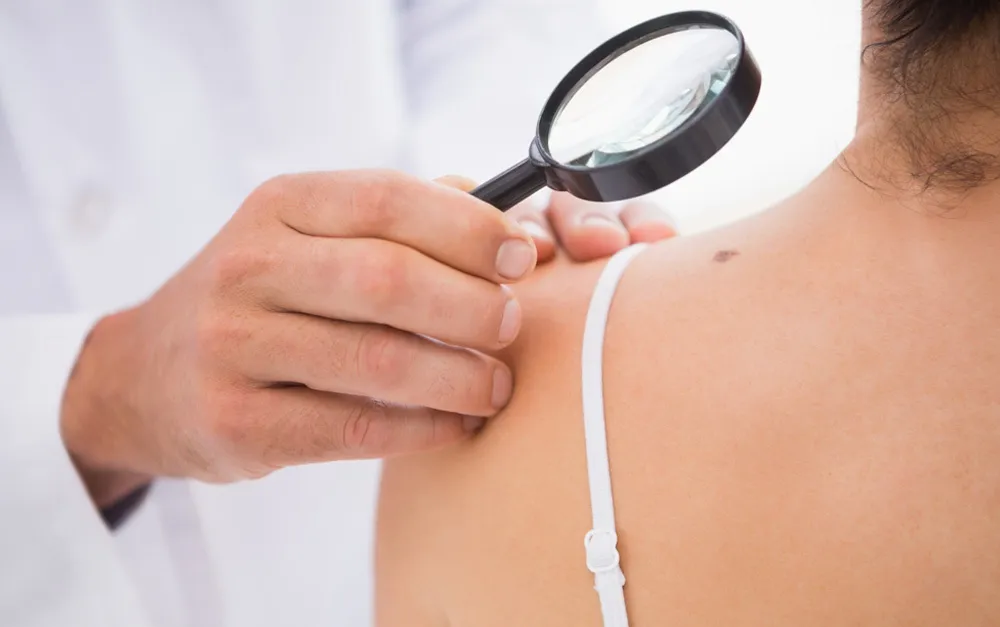
Spotting skin cancer early can save your life. This guide explains how to identify an odd spot, why many skin cancers don’t look like traditional moles, and how the ODD SPOT tool makes early detection easier for everyone.
A Simple Conversation About Skin (by Janyce Sloat)
In the summer of 2022—during a hot, dry spell filled with wildfire smoke—my aunt Dianne walked into the kitchen after gardening. As the “skin person” in the family, I quickly noticed the “zit” she pointed out. One glance, and I knew: this wasn’t acne. It was an odd spot.
“How long has it been there?” I asked.
“Maybe weeks… maybe months,” she said. “I’ve been picking at it and it just won’t heal.”
That’s the difference:
zits heal. Odd spots don’t.
After some convincing, she had it checked. By fall, that stubborn “pimple” had been removed with Mohs surgery and diagnosed as a Basal Cell Carcinoma—the most common type of skin cancer.
Her experience highlights why skin cancer awareness starts with something simple: talking about your skin.
When Skin Cancer Doesn’t Follow the ABCDEs
Many people rely on the traditional ABCDE rule (Asymmetry, Border, Color, Diameter, Evolving) to check for melanoma. But most non-melanoma skin cancers like basal cell carcinoma (1/5 people get one) or squamous cell carcinoma don’t necessarily follow those rules.
Aunt Dianne—an experienced nurse—never expected her puffy, pink, oozing “acne” to be cancerous.
That’s why recognizing an ODD SPOT matters.
ODD SPOT: An Evidence-Based Tool for Spotting Skin Cancer
To help people recognize the broader signs of common skin cancers, we created ODD SPOT, a clear, easy-to-remember mnemonic:
- Odd-looking
- Dry / Scabby
- Discolored
- Shiny
- Puffy / Painful
- Open / Oozing
- Transforming
If a spot shows one or more of these features, it’s worth getting it checked.
Early detection dramatically improves outcomes—and often prevents more invasive treatments.
Why ODD SPOT Makes Skin Cancer Easier to Spot
Developed by Karen Babcock Nern, MD, MBA, FAAD, a double board-certified dermatologist and Mohs micrographic surgeon, alongside a team of physicians and scientists, ODD SPOT is designed to make skin-cancer education:
- simple
- inclusive
- evidence-based
- easy to talk about
Everyone gets spots. Knowing which ones are odd can save a life.
Join the ODD SPOT Movement
Help bring better skin-cancer awareness, education, and early detection tools to your community.
Sign up for updates, resources, and ODD SPOT educational materials.
